Pillow covers form a removable layer around a pillow, helping protect its surface during everyday use. Protective Pillow Covers are designed to create a practical barrier against dust, spills, and general wear. Their role within bedding is distinct from sheets and duvet covers, which cover mattresses and comforters.
Protective pillow covers may use tightly woven or coated materials to limit the passage of moisture and particles. Depending on the construction, they can help keep pillow fillings cleaner and reduce the frequency of deep cleaning. Fabric, closure style, and fit influence how securely a cover stays in place.
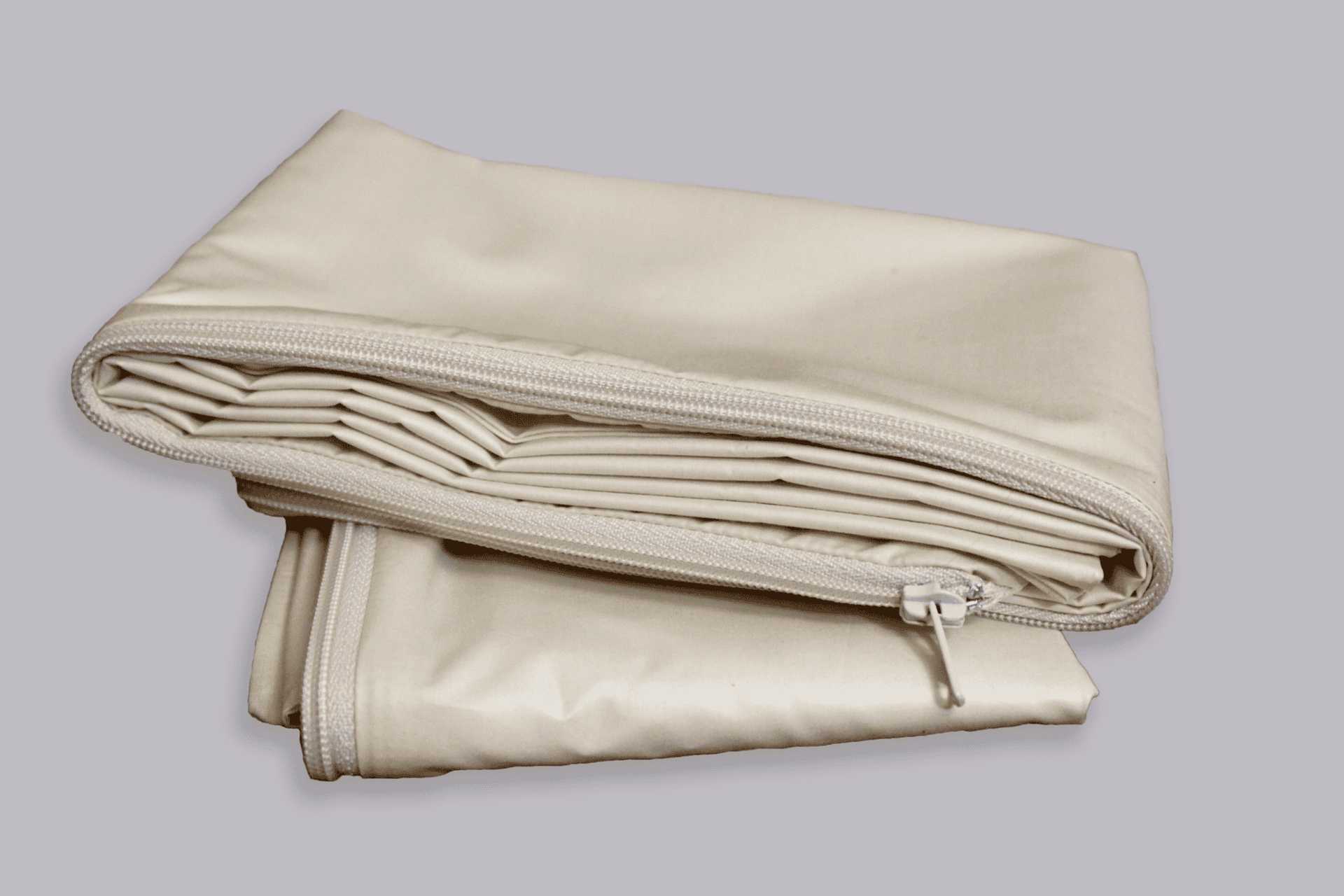
A properly sized cover should match the pillow’s dimensions and shape without excessive tension or loose fabric. Zippers, envelope closures, or other fastenings can help enclose the pillow, while smooth seams may improve comfort beneath a regular pillowcase. Care instructions vary by material and should guide washing and drying.
In pet-friendly bedding, a protective cover can help shield pillows from fur, dander, and occasional messes. It is a useful supplementary layer, but it does not replace routine laundering or address every allergen. Regularly cleaning pillowcases and checking covers for damage supports a more hygienic sleeping environment.
When comparing pillow covers with other bedding, consider breathability, water resistance, washability, and material suitability. These factors matter alongside sheets, duvet covers, and organic mattresses when selecting compatible sleep products. A cover’s function is to protect the pillow while maintaining a comfortable, manageable layer in the bedding setup.
 Bedding